Can’t we just clean it up?
August 29, 2026
Astroscale's ADRAS-J mission did something no one had done before. It rendezvoused with a dead Japanese rocket stage tumbling through low Earth orbit and showed that a spacecraft could autonomously approach and inspect an uncooperative piece of junk from meters away; the mission has since completed its operations and begun its deorbit.
ClearSpace is preparing an ESA-backed mission to capture and deorbit a retired satellite, PROBA-1. These are real engineering achievements, and the teams behind them are solving one of the hardest problems in orbital mechanics.
So when people ask why we don't just clean it all up, the question deserves a careful answer. Removal is necessary for the long-term stability of the orbital environment. It is not enough, by itself, to manage the risk operators carry today.
Two kinds of threat
The debris problem divides into two categories that call for different responses.
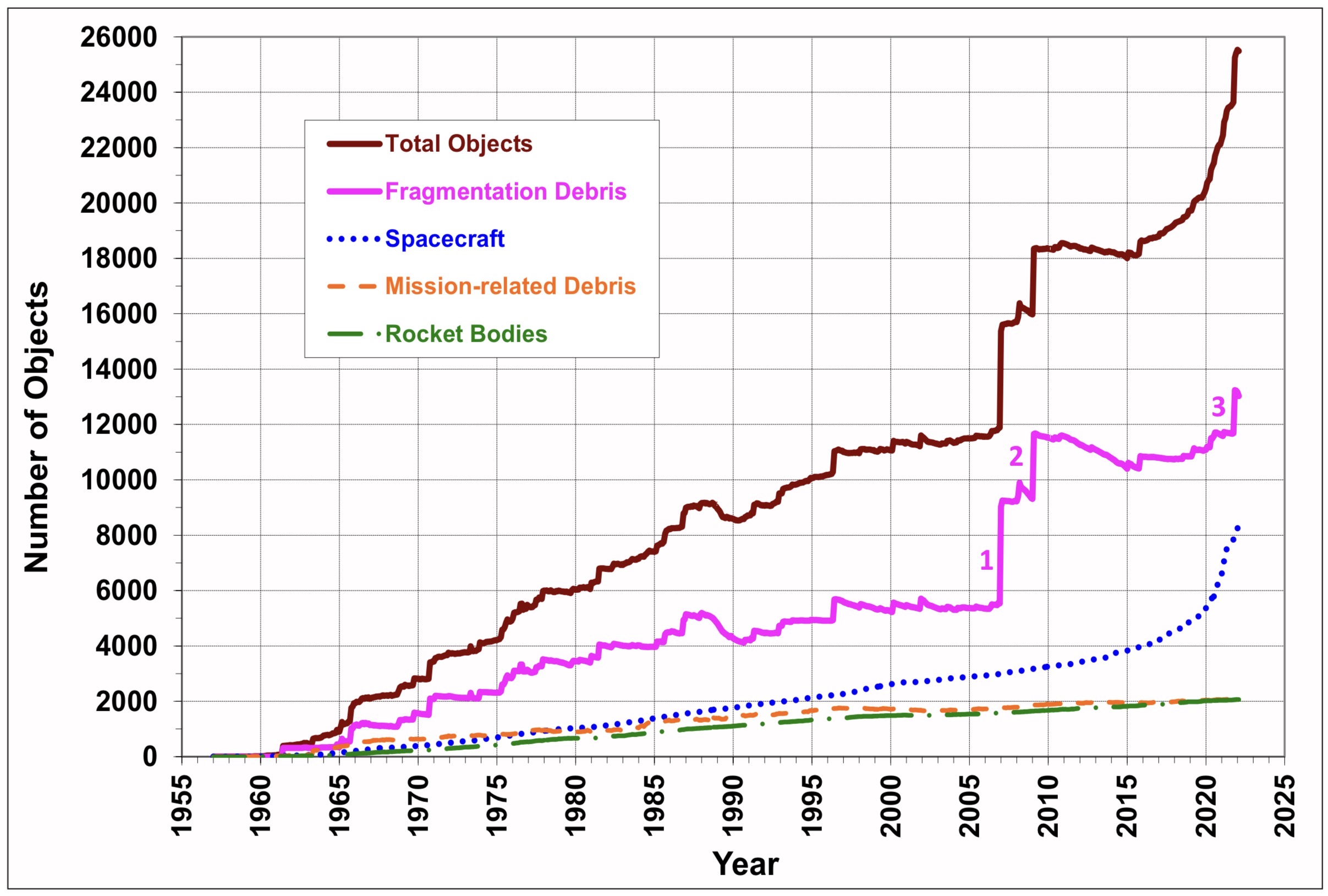
The first is systemic environmental risk. Large derelict objects, mainly dead satellites and spent rocket stages, are the main source of future catastrophic collisions. When two large objects collide at orbital velocity, the result is not a dent. The 2009 collision between an operational Iridium satellite and the defunct Cosmos-2251 produced more than 2,000 trackable fragments and an unknown number of smaller ones. China's deliberate destruction of its Fengyun-1C weather satellite in 2007 generated over 3,500 trackable pieces, many still in orbit nearly two decades later. Each event like this seeds the environment with debris that persists for years or centuries, depending on altitude.
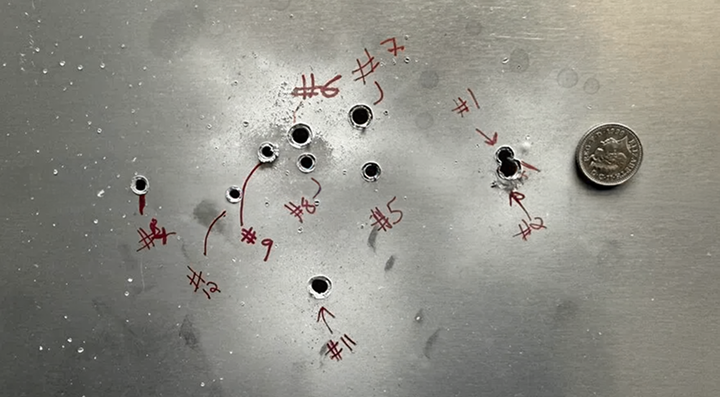
The second is individual mission risk from what researchers call lethal non-trackable debris. ESA's MASTER model estimates upwards of 130 million fragments smaller than a centimeter in low Earth orbit. No conjunction warning is ever issued for an object that cannot be cataloged; a strike from this population either happens or it does not. One industry study attributes more than 95 percent of mission-ending collision risk to exactly this class of debris.[^1]
These are different kinds of threat, not different magnitudes of the same one. Large derelicts are what create future debris, while small fragments are what actually strike a satellite in the course of a normal year. Removal addresses the first category. It cannot directly address the existing small-fragment population.
What removal can and cannot bend
The strategic logic of removal is sound. Take a derelict out of a congested orbit before it collides, and you prevent thousands of fragments downstream. One removal potentially prunes an entire branching tree of future debris.
The constraint is throughput. ClearSpace's debut mission targets a single object. Future concepts envision removing dozens of large objects a year as costs fall, and those projections are ambitious; no operator has demonstrated that cadence. So the useful question is not "how long would it take to remove everything?", which misrepresents what removal sets out to do. The real question is more specific. How many high-risk derelicts must come out of which orbital shells to materially change the long-term debris growth curve, and what risk remains even if that program succeeds?
The stakes of the first half of that question were set out in 1978, when Donald Kessler and Burton Cour-Palais described the feedback loop that still defines the field. Once debris density in an orbital band crosses a threshold, collisions between existing objects produce fragments that cause further collisions, and the population becomes self-sustaining no matter what anyone launches. ESA records an average of 9.8 non-deliberate fragmentations a year across the last two decades, a rate that has stayed stable while the consequences of each event vary widely. A sustained, well-targeted removal program could bend the growth curve toward stability, and that outcome alone would justify the investment.
The second half of the question is the uncomfortable part. Even a perfectly executed removal campaign leaves the existing small-fragment population untouched: the inherited stock of six decades of spaceflight. Fragments in low orbits get dragged down and burn up within years; those higher up persist for centuries. No proposed technology can address that stock at scale. It can only be lived with, and living with a risk starts with measuring it.
From measurement to management
If removal handles the systemic threat, the question left for operators is practical: what is actually hitting my spacecraft, and what do I do about it?
Odin Space builds the layer that answers it. The Odin Black Box is a compact sensor unit mounted on the host spacecraft; its impact instrument establishes that an external strike occurred, where on the structure it happened, and how severe it was. Odin’s roadmap adds Outpost satellites carrying the same sensing technology into orbits where hosts are not flying, extending that picture across the regimes that matter. Odin Overwatch turns that data into a monitoring service.
Measurement feeds decisions on two timescales. Operationally, as hosted and Outpost measurements accumulate, Odin can establish whether a particular shell is carrying higher flux than the models predicted, and an operator can act on it: add shielding to the next build, or turn a vulnerable face away from the stream. The same evidence then goes to work on the financial side. Better measurement gives underwriters a stronger basis on which to price collision cover, and attribution data lets them distinguish losses caused by unforeseeable debris from everything else. That is what begins to put a financial safety net under the risk that removal cannot eliminate.
What removal leaves behind
None of this diminishes what the removal companies are building. Preventing catastrophic breakups in crowded orbits is enormously valuable work, and it should accelerate. But there are two categories of threat here, and no single approach covers both. Removal lowers the probability of future breakups. What it leaves untouched is the population already in orbit, and the only thing to be done with that is measure it well enough that the loss can be priced and insured. A mature framework for orbital sustainability needs both, running in parallel.
Odin Space builds the intelligence layer that complements debris removal. Contact us to find out more.
Odin Space provides in-orbit impact data and does not underwrite insurance. Collision cover referenced here is underwritten through Lloyd's of London and arranged through the regulated broker WTW.
Sources: Kessler, D.J. & Cour-Palais, B.G., "Collision Frequency of Artificial Satellites: The Creation of a Debris Belt," Journal of Geophysical Research, 1978; ESA Annual Space Environment Report (fragmentation event rate); ESA MASTER-8 model; Kelso, T.S., "Analysis of the Iridium 33–Cosmos 2251 Collision," CelesTrak, 2009; NASA Orbital Debris Program Office, "History of On-Orbit Satellite Fragmentations," 16th ed., 2024; Astroscale and ClearSpace mission documentation.
[^1]: HDI Global Specialty, space debris study, 2023: more than 95% of mission-terminating collisional risk is attributed to lethal non-trackable debris.